Field HRMS
The company’s HR system only worked on a desktop, and many of its people worked remotely or on site. I led a team of four to rebuild it as a mobile app that field staff actually use.
- Role
- Founder & Lead Developer
- Client
- A telecom equipment manufacturer
- Timeline
- Jan – Jul 2024
- Team
- Me, 1 UX designer, 2 front-end devs
- Stack
- Flutter · BLoC · Hive
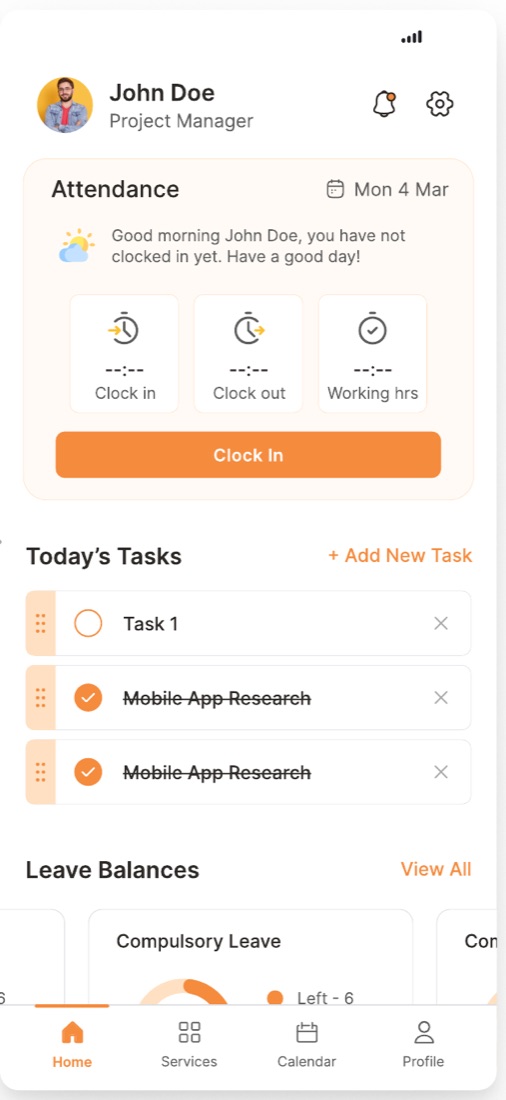
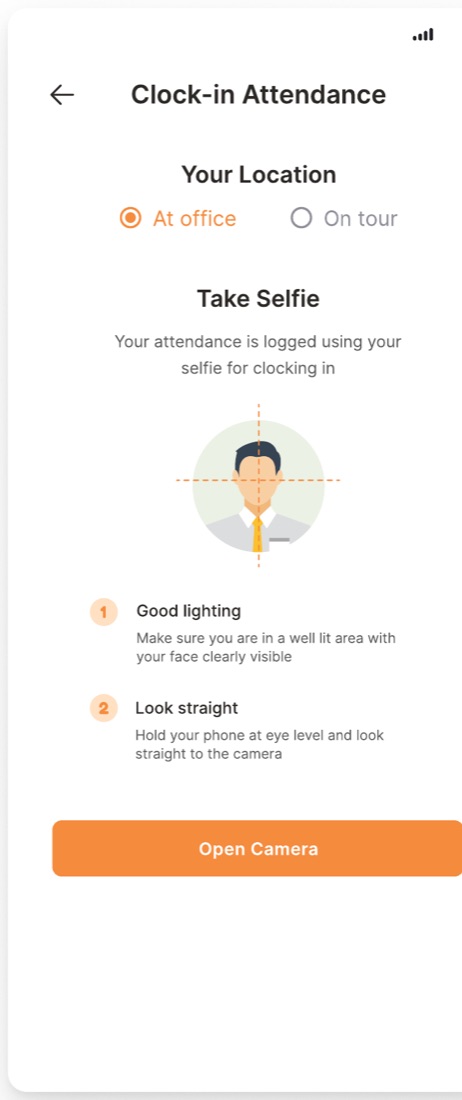
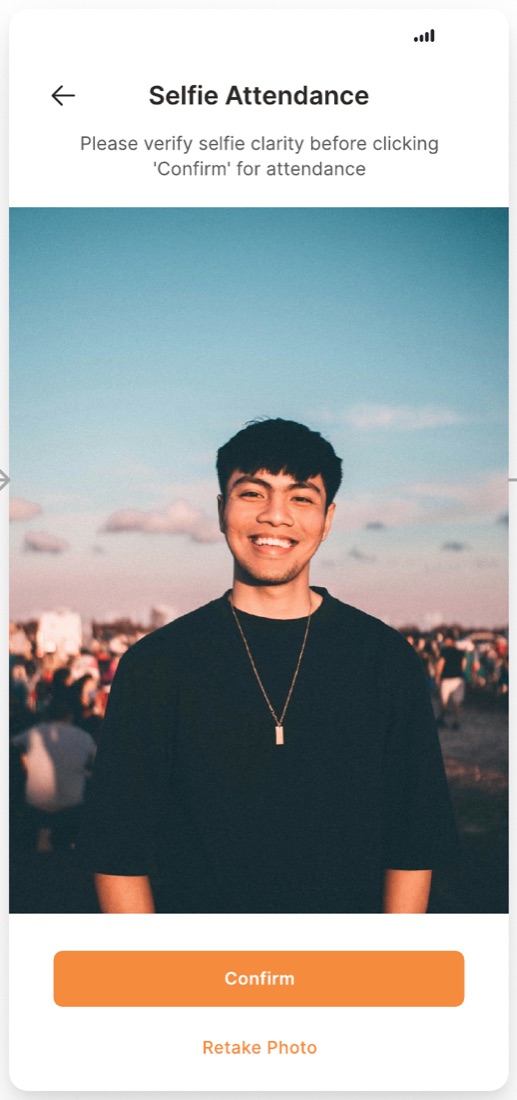
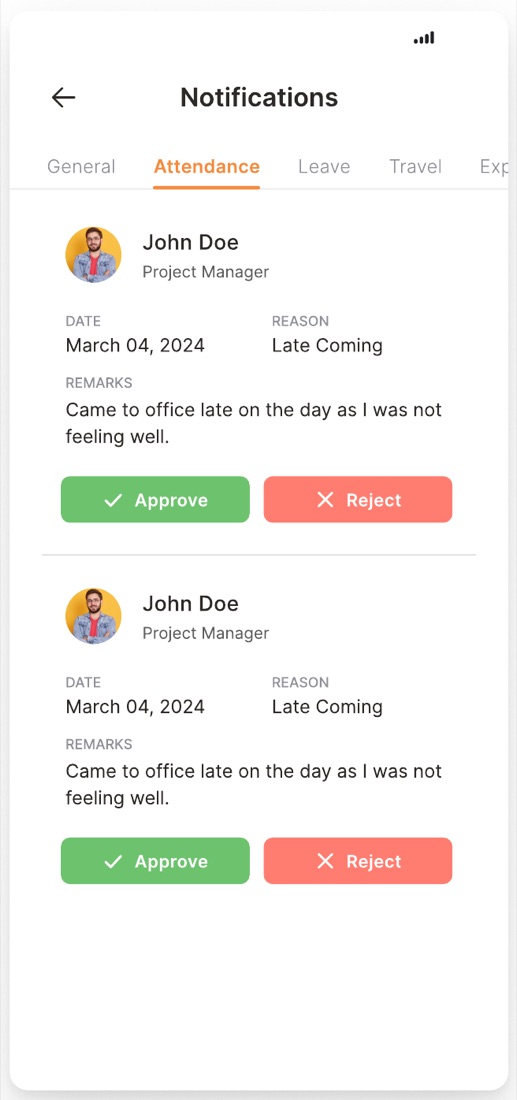
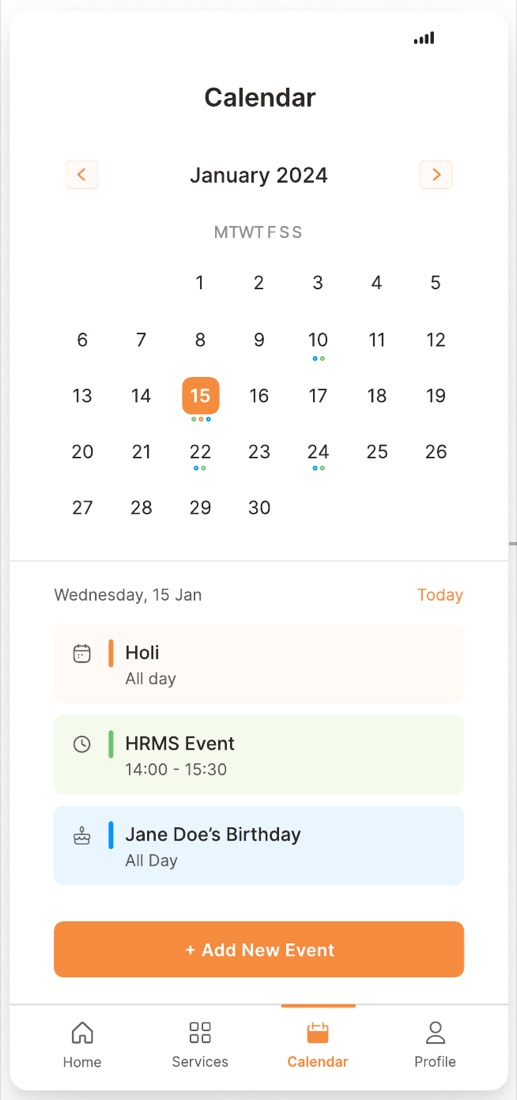
“Everything needs to be handled on the go”
Remote and on-site employees didn’t have laptops, but attendance, leave, travel and expenses all lived in a desktop HR system. So staff sent photos to their managers as proof of attendance, managers verified them by hand, and urgent requests waited until someone got back to a desk.
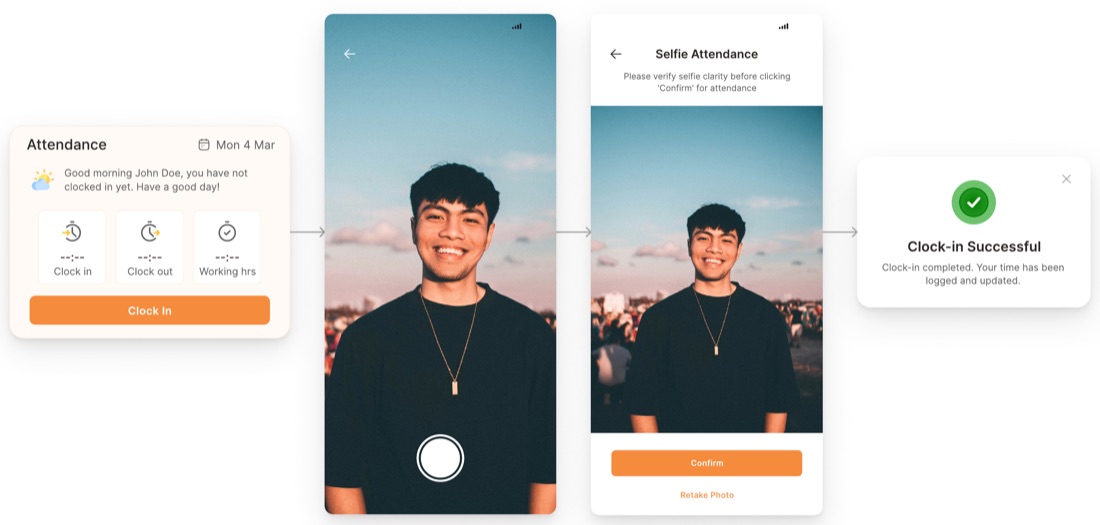
Managers had a second worry: without verification, people could log attendance they hadn’t earned. And employees kept their daily task lists in the Notes app, one more place to check.
Before writing code, find out what people actually do
- 01Stakeholder interviewsSponsor, field staff, managers and HR: what worked, what didn’t, what was in scope.
- 02Map the desktop systemWalked every existing workflow so the mobile app kept what already worked.
- 03BenchmarkStudied leading HR apps: key actions on the home screen, a shared calendar.
- 04ReframeHow might we make attendance easy for remote staff while avoiding false logs?
- 05Design → test → shipTwo-week sprints: design, evaluate with users, build and deploy.
Selfie attendance, and what testing changed
Six modules, one structure
The codebase follows Clean Architecture: every module (attendance, leave, travel, expenses, employee, events) has the same three layers, so features could be built in parallel and new ones follow a known path.
Why Flutter: one codebase for iOS and Android with a small team. Why Hive: field sites have patchy signal, so profile data is cached on the device and the app stays usable offline.
Shipped, and still growing
What I took away: keep what already works. The biggest wins came from moving existing workflows to the phone faithfully, then fixing the few that hurt, not from redesigning everything.
Need someone who can talk to users and ship the app? Let’s talk.